Showing posts with label plastic surgery bangalore. Show all posts

Sunday, August 7, 2011

Cosmetic Surgery - Is it really worth the Risk?

             Cosmetic Surgery - Is it really worth the Risk?


Medical reviews have proved beyond doubt the rising popularity of Cosmetic Medical Services, especially Cosmetic Surgery. It is a fact that a physically attractive or smart person has better opportunities in life, is judged more positively and gets preferential treatment in situations such as marriage and employment. This can significantly impact the person's life as a whole.

At the same time, there are reports in media of complications after Cosmetic surgery procedures – “Patient dies after Liposuction surgery”. This has led to a confusion among the layman about whether to consider Cosmetic Surgery at all . The man on the street hears of either stories of cosmetic surgery involving glamorous people, OR ‘horror’ stories of Cosmetic Surgery gone wrong. Neither of these is something the common man can relate to. Is there nothing in between these two extremes? Can Cosmetic Surgery or procedures not be done safely for the layman?
Cosmetic procedures can certainly be done safely, ensuring both cost effectiveness and patient satisfaction, very often giving a new lease of life to the person concerned. All that is needed is to take care of a few issues. Let us see what they are.

1. Patient expectations
2. Procedure related risk
3. Procedure benefits – extent and duration
4. Health care facility
5. Surgeon involved
6. Procedure Costs
7. Decision making

What is a reasonable expectation?
Reasonable is one that matches with common opinion. In case of a Cosmetic problem, there exists a consensus opinion (scientific impression) about what is beautiful and what is not, which also has a scientific basis. This can be confirmed by the surgeon, who will accurately tell how different from the normal the present condition is.
When the opinion of the surgeon and the patient match each other, the expectation is considered reasonable. Sometimes, this does not match-seen usually as the patient referring to a minor problem (minor in the Surgeon’s opinion) as very severe, enough to upset the person significantly and interfere in their daily life. This is called an unreasonable expectation. This is a tricky situation, with high chances that the patient is unhappy even when the cosmetic treatment is successful.
In such a situation, the surgeon will discuss frankly with the patient the amount of correction possible, most importantly whether complete correction is possible or not. This varies with each different type of problem; based on his personal experience with similar cases, the surgeon will explain the likely result by keeping the procedure risks low.
A reasonable person is usually willing to accept that in certain situations, a minor problem may be very difficult to correct perfectly OR that complete correction of a major problem is difficult. If the person still refuses to understand, the surgeon should realize that chances of an unhappy patient or complications are high.
How does the risk severity change with the procedure? Usually, the less invasive (deeper) the procedure, lesser are the risk of complications. However, long lasting and better corrections can be achieved only with invasive procedures, for problems that have more than one treatment option. Thus, a balance has to be kept between the amount of correction desired and it’s longevity to keep the risk reasonable.
Further, there is an inherent risk in every procedure that a surgeon usually will explain to the patient. This risk depends how well established the procedure is worldwide and how familiar the surgeon is with the procedure.
To illustrate, liposuction procedure for body reshaping is extremely safe when done to a reasonable extent. However, If extensive liposuction is planned-called Mega liposuction-the risk of complications increase - depending on the patient’s general health, the surgeon’s experience, the availability of intensive post op care, etc.
Similarly, when correction for a sagging face is planned, it can be done as a minimally invasive procedure called thread lift with minimal risks as an office procedure. Alternatively, a face lift procedure is a major surgery under general anaesthesia with definite risks of nerve injury, face swelling-bruising and needs a few days to recover both in hospital and at home. Also, the surgery needs a skilled and experienced person to keep risks low. However, with severe sagging problem, thread lift cannot help; face lift surgery is needed.
Further, with mild to moderate problems, risks may be kept low by choosing a minimally invasive procedure if available, such as thread lift; but keeping in mind that results will last only about half as long as a face lift surgery where results will last about 12-15yrs or more.
Does the choice of the health care facility really matter while opting for Cosmetic Surgery? Usually those undergoing major Cosmetic Surgery are healthy or have minor medical problems that are under good control; the stay after surgery in hospital lasts about 2-3 days. A health care setup with basic safety facilities in the Surgical Suite will suffice, more so if no major anaesthesia is involved and patient will not stay overnight. Sometimes, a setup with an ICU facility is essential, as when doing a Megaliposuction procedure, OR when doing a regular procedure but for a person with definite medical problems.

Training and experience of the Physician (Surgeon) are very essential. With the presence of self proclaimed experts in Cosmetic Medical Care, how does one choose/identify the right Physician?
Basic considerations in choosing a Surgeon include

1. Qualification
2. Association/professional body memberships
3. Experience of the surgeon with the procedure
4. Approval by Hospital to surgeon
5. Hospital approval
A trained Plastic Surgeon completes at least 6 years of surgical training with at least 3 years intensive training in Reconstructive & Plastic Surgery. In India , this earns the qualification of either a M.Ch. or a DNB in Plastic Surgery and the membership of the Specialty Association – association Plastic Surgeons of India – www.apsi.org.in . Similar qualification in the UK is a FRCS in Plastic Surgery and in US the person will be a Board Certified Plastic Surgeon.

What makes a Plastic Surgeon competent to handle Cosmetic Medical Care?
Plastic surgeons work with patients at all stages of life, evaluating health, medical, psychological history, and body type to provide comprehensive advice according to their personal cosmetic medicine goals. They help explain the specific results a procedure can and cannot deliver and its associated risks; how to choose the right course of action depending on our age, needs, and wishes; and what we can expect to look like after the procedure.
Unlike others who may be trained in only a few cosmetic procedures, plastic surgeons are educated in the full spectrum of cosmetic surgical and non-surgical care. They hone their skills and techniques through one of the lengthiest and most comprehensive training programs in all of medicine.Besides delivering great results for patients through comprehensive cosmetic procedures, our focus as plastic surgeons is on patient safety. We believe that patients deserve the highest quality of care and safety, which is delivered in our accredited facilities. Also, Plastic surgeons are actively involved in research to develop new techniques and improve existing procedures that will deliver scientifically proven outcomes for patients undergoing cosmetic or reconstructive procedures.

Are procedure costs related to risks or outcomes in any way?
With increasing demand for Cosmetic Surgery, patients and physicians look for cheaper services.However, cutting costs beyond a point can compromise safety . Practical ways to keep costs less include choosing a non-Metro city (such as Mangalore) OR choosing a surgeon who is less busy, provided he meets your satisfaction and gives you time.Chances of complications are high with physician or others who undertake procedures without the suitable training, knowledge or experience. It leads to disappointment, loss of time and money besides bringing disrepute to the specialty

How quickly can a decision for Surgery be made?
Though a quick decision can be made about treatment for a common problem, a second consultation is usually helpful – whether with the same or another surgeon. Collecting information on the matter from websites and discussion forums will give you a better idea of what to expect with the procedure. Popular stories of disasters after cosmetic surgery result from inappropriate/hasty decisions or poor surgical technique. examples of inappropriate decisions include agreeing for an over-sized breast implant (high risk of wound breakdown and implant removal) OR excess liposuction (leading to skin necrosis, fat embolism or death). A popular quote among physicians says “A Good Surgeon knows how to operate, The Better one knows When to operate, The Best one knows when not to operate” A competent surgeon knows the shortcomings of a procedure well.

Keeping these issues in mind will ensure Cosmetic procedures stay safe and cost effective, while more people avail these benefits and improve their lives.


The responsibility of creating this awareness lies with the Plastic Surgery Fraternity.


http://www.plasticsurgerymangalore.com

Plastic Surgery-Common Myths busted - An Enigma of Modern Medicine

An Enigma of Modern Medicine-Plastic Surgery-
Common Myths busted 

Plastic surgery is a very young specialty in modern medicine. Just as most fields in modern science, recent developments have been phenomenal; when used suitably, they make a tremendous difference to the life of the person concerned. Effective benefit to society is very often prevented by lack of awareness or prevalence of wrong notions; Plastic surgery is a classic example. Knowing the story of the growth of Plastic surgery across the world will clear most of these issues.

As a recent branch of modern medicine, awareness about Plastic Surgery is still inadequate among common man, leading to loss of benefit to society. Few false notions compound this problem. Many recent developments, by simple techniques, can make dramatic changes to live of average person.
The foremost false notion is when Plastic Surgery is equated to Cosmetic surgery. Though cosmetic surgery issues/news are more glamorous/attention catching, though it’s demand often portrayed as rapidly increasing, the fact is that cosmetic surgery procedures are still just a fraction of the entire spectrum of Reconstructive & Plastic surgery, more so in a country such as India. 

Modern Plastic Surgery has it’s origin in treating complex gunshot wounds, deformities & disabilities that occurred during the first world war. Since then, surgeons began increasingly applying Plastic Surgery principles to improve results in existing procedures or treat problems without any existing treatment.
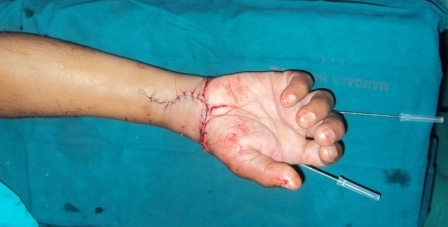
With the development of Microvascular Surgery in the 1960s, a Plastic Surgeon was able to give dramatic results by means of Re-implantation procedures & Microsurgical tissue transfer. The former allowed successful reattachment of a body part that is detached completely due to injury - amputated- hand, foot, digits, even ear, nose and scalp have be successfully reattached; the latter allows use of body tissues from one area (where they can be spared) to an area where tissue/body part has been damaged by injury, infection or even cancer. The most recent application of this has been Hand transplant and Face Transplant Surgery.

The field of Plastic Surgery expanded to include Burns Care, Craniofacial Surgery, Hand Surgery and Deformity & Disability correction for externally visible problems. Benefits of these principles are best appreciated in procedures of the hand, face and genitals, by making a dramatic difference to the outcome; very often as the critical difference in success & failure of the procedure.
Every Indian Plastic Surgeon takes pride from the fact that worldwide, the roots of Plastic Surgery is traced to the ‘Sushruta Samhita’. This text was written by a Indian Physician ‘Sushruta’ in700BC. Of late, worldwide developments in Plastic surgery are coming from many Indian institutes; and both overseas surgeons (from ‘developed’ countries) and patients are visiting India to benefit from these advances.


Over the last decade, Cosmetic Surgery has caught the attention of both media and common man. As the glamour industy demanded enhancement of beauty, Plastic Surgery techniques came to their rescue. This led to a wrong notion that Cosmetic Surgery is meant only for the upper class in society. Cosmetic (Beauty/Appearance) problems in the rich & affluent have one fundamental difference in similar problems among the average/lower economic class. While the former seek to enhance beauty that is presently normal, the latter seek to restore to normal what is presently lost /damaged and is often a social need, especially when beauty/appearance is severely abnormal/distorted. Usually a person without smart looks in not considered approachable; consequently correcting this appearance can have dramatic benefits in their job or personal life.

Correcting a crooked nose of a young lady or balding scalp in a young male can help in a marriage alliance OR improve personal relationships; reducing oversized breasts of an old lady/young girl can relieve her of the daily embarrassment in addition to the shoulder or neck joint problems. Simple correction of a face scar can restore self-confidence in a person and give new meaning to life. This and other applications are unfortunately not illustrated to the general public, adding to the notion that these procedures are not meant for the common man. Matters cannot be farther from the truth.
Though initially available only in the Metro cities, obviously at a high cost-by Indian standards- these procedures are now increasingly available in smaller cities such as Mangalore, Baroda or Cuttack. This has resulted in a decrease in the treatment costs, but at the same quality that Indian healthcare is known for. Also, Cosmetic or Plastic Surgery procedures make a far greater impact on the lives of the less affluent section of society; correcting a hand deformity in the sole earning member can feed an entire family, correcting face deformity of a person cured of Leprosy can remove the disease stigma and help his/her integration into society. Both these facts make the need for Plastic and Reconstructive surgery far greater in smaller cities.

However, society is deprived of this benefit due to the false notion that Plastic or Cosmetic Surgery is available only in big cities, that too at a prohibitive cost.

In spite of all these benefits, there are the darker issues too. With a rapidly spiraling demand, facilities offering cosmetic services are coming up at every street corner in larger cities. Unfortunately, many of these centers are run by people with inadequate or poor training; if the average person is lured by the aggressive publicity pursued by such centres they entail a high risk of complications or poor results. It takes about 12-13 years of rigorous medical training to qualify as a Plastic Surgeon, similar to that needed to be a Cardiac or Neurosurgeon- this alone guides the surgeon to make a sound decision by balancing the patient’s expectations with the problem severity. Thus, approaching the right person is essential for a treatment with predictable, safe results and thus and a new lease to life. Qualified Plastic surgeons in India are members of the national association as seen in at www.apsi.org.in

Thus, improved awareness is essential among the average person, to ensure society at large benefits from this medical specialty, while avoiding permanent scarring of a person’s body by falling into the wrong hands. This insight has been compiled to clarify the role of Reconstructive and Plastic Surgery, with improved benefits to society.
For further details, visit www.plasticsurgerymangalore.com

Monday, May 25, 2009

When can a Plastic surgeon make a difference?


When someone has either a:

1.Wound:any wound on the hand or face or a complicated wound anywhere
2.deficient function: of limbs, or externally visible structure in head-face-neck region or trunk or
3.cosmetic improvement needed.


Thursday, May 14, 2009

What is plastic surgery?

What is Plastic Surgery?

Plastic surgery is a super-specialty branch of medicine. the name is derived from the Greek word 'plasticos', meaning 'to mould'. A plastic surgeon uses principles of reconstructive surgery to 'mould' tissues of the body (as needed) to achieve optimal results.
These principles are mandatory when dealing with complicated wounds, corrections of externally visible deformity & functional disability and enhancement in the form or beauty of the human body.

Such surgical procedures need sound planning, delicate technique, gentle tissue handling and predictable results.

Though the scope of Plastic & Reconstructive surgery is vast, it's principles are most essential in procedures involving the face (Cranio-Maxillo-Facial Surgery), Hand (Microvascular & Hand Surgery) or procedures on nerves-blood vessels in any tissue (Microsurgery). Surgical procedures on structures with delicate movement such as Tendons, small joints (Hand), fingers or eyelids are enormously benefited by use of these techniques.